
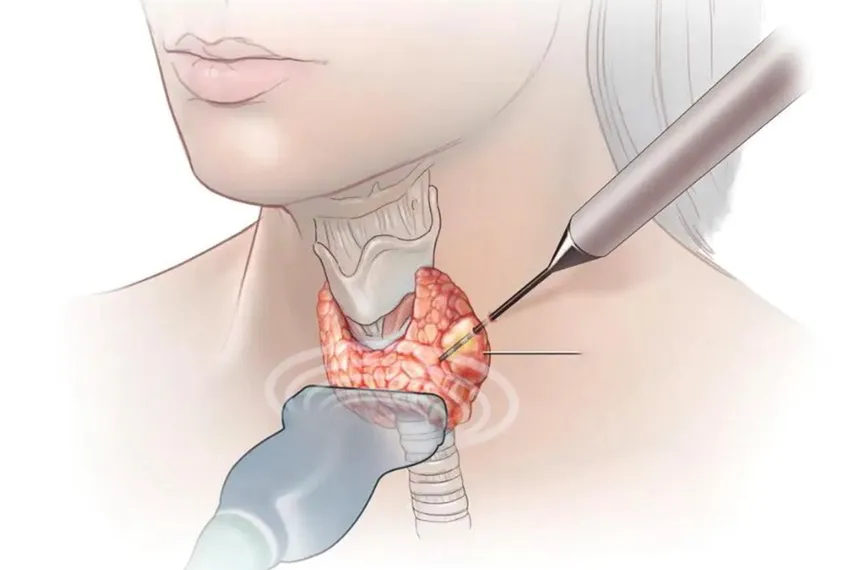
Radiofrequency ablation (RFA) is a technique that uses heat generated by a high-frequency current to shrink thyroid lesions, performed under ultrasound guidance. It is an advance in treating benign thyroid tumors without surgery.
Advantages of the method
- Preserves the maximum amount of healthy thyroid tissue and thyroid function.
- Leaves no scar, requiring only a very small puncture site.
- Does not require general anesthesia, with a quick recovery time.
- Can be performed on an outpatient basis, limiting hospital stay.
Who is suitable for RFA?
The method is usually considered for benign thyroid nodules confirmed by fine needle aspiration (FNA), and for nodules causing compression, discomfort or aesthetic concerns. The doctor will assess the size, location and characteristics of the lesion before deciding.
Consultation process at Phuc Khang
At Phuc Khang 5D Ultrasound Clinic, Dr. Truong Xuan Luc, MSc examines, performs ultrasound and provides detailed consultation on the indications, benefits and important considerations of the method. Patients are clearly informed so they can understand it correctly and choose a suitable treatment direction.
Notes
Not every thyroid nodule requires intervention. Many benign nodules only need periodic monitoring. The decision to perform radiofrequency ablation must be based on the diagnostic results and the assessment of a specialist doctor.
This information is for reference only and does not replace direct medical advice.
Related articles
- Does a Benign Thyroid Nodule Always Require Surgery?Many benign thyroid nodules can be monitored or treated with minimally invasive methods instead of surgery. Learn about the options available today.
- Fine Needle Aspiration: Procedure and What You Need to KnowFine needle aspiration (FNA) helps determine whether a thyroid or breast lesion is benign or malignant quickly and safely.
- Thyroid Ultrasound: When Should You Have One and What Can It Detect?Thyroid ultrasound helps detect thyroid nodules, cysts and assess the risk of malignancy early. Learn when to have one and what to prepare.