

- 15 Jan, 2026
- Thyroid
- By truong-xuan-luc
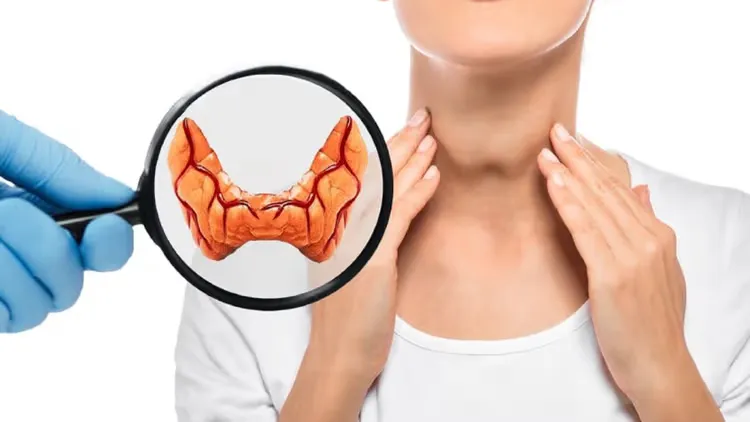
The thyroid is a gland located at the front of the neck that helps regulate the body’s metabolism. Thyroid conditions such as nodules, cysts, thyroiditis and thyroid cancer often develop silently in the early stages. Ultrasound is therefore an effective, safe and non-invasive way to detect them early.
What is a thyroid ultrasound?
A thyroid ultrasound uses sound waves to create images of the thyroid gland and surrounding structures in the neck. It does not use X-rays, does not cause pain, and can be repeated as often as needed without affecting your health.
When should you have a thyroid ultrasound?
You should have a thyroid ultrasound if you notice any of the following signs:
- A lump or a feeling of fullness or difficulty swallowing in the neck.
- A visibly enlarged neck, a palpable nodule, or asymmetry between the two sides.
- A family history of thyroid disease.
- Ongoing monitoring of a previously detected thyroid nodule or cyst.
- A routine health check, particularly for women over 30.
What can a thyroid ultrasound detect?
Ultrasound shows the location, number, size, shape and characteristics of a thyroid nodule: whether it is solid or fluid-filled, whether it contains calcifications, whether its margins are smooth or irregular, and how much blood supply it has. From this information, the doctor can classify the risk and decide whether a fine needle aspiration (FNA) is needed or whether monitoring is sufficient.
The role of elastography
When needed, elastography provides additional information about the stiffness of a lesion. Because malignant tissue is usually stiffer than healthy tissue, this information helps distinguish benign from malignant lesions and reduces the chance of missing a dangerous finding.
How should you prepare for a thyroid ultrasound?
A thyroid ultrasound does not require fasting or a full bladder. You only need to wear a top with a wide neckline for convenience during the examination. The scan usually takes just a few minutes and you receive the results immediately afterwards.
Thyroid ultrasound at Phuc Khang
At Phuc Khang 5D Ultrasound Clinic, every thyroid ultrasound is performed and interpreted directly by Dr. Truong Xuan Luc, MSc — a doctor at Hoan My Private Hospital Binh Duong. He explains each image clearly, helping you understand your condition accurately and follow the right monitoring plan.
Frequently asked questions
How often should I have a thyroid ultrasound? For healthy individuals, screening every 1–2 years is reasonable. For those being monitored for a thyroid nodule, the doctor will typically schedule a follow-up in about 6–12 months depending on the characteristics of the lesion.
Can a thyroid ultrasound detect cancer? Ultrasound helps assess risk and guide next steps; a definitive diagnosis requires cytology results when a biopsy is indicated.
Conclusion
Early detection is the single most important factor in preserving thyroid function and achieving effective treatment. If you notice any symptoms in the neck area, have a check-up soon so a doctor can evaluate your specific situation.
This content is for reference only and does not replace direct medical advice.
Related services
- Specialized Thyroid - Breast ultrasoundSpecialized thyroid and breast ultrasound: assessment of nodules, cysts and lesions, combined with elastography to distinguish benign from malignant findings.
- Ultrasound screening for Thyroid - Breast - Cervical cancerUltrasound screening for thyroid, breast and cervical cancer helps detect suspicious lesions early and reduce the risk of missing them.
- Consultation on absolute ethanol injection for benign thyroid cysts & nodulesConsultation on absolute ethanol injection for benign thyroid cysts and nodules under ultrasound guidance: minimally invasive, low pain, highly effective.