
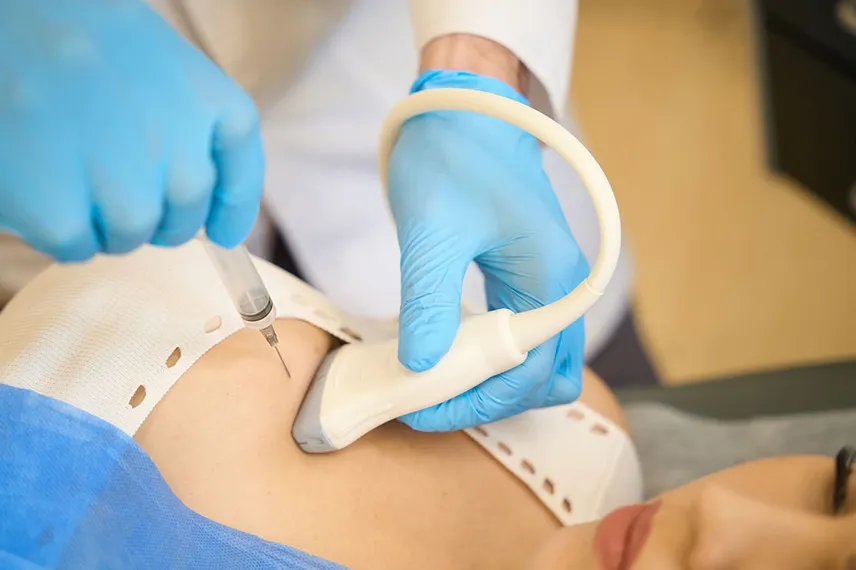
Fine needle aspiration (FNA) is a technique that collects a small amount of cells from a lesion for cytological examination, helping determine whether the lesion is benign or malignant.
When is fine needle aspiration needed?
The technique is indicated when ultrasound detects a thyroid nodule or breast lesion with suspicious features. The FNA result is an important basis for the doctor to decide on monitoring, conservative treatment or referral for surgery.
Advantages
- Minimally invasive, performed quickly, with local anesthesia.
- Safe, with few complications.
- Provides important information for diagnosis.
Procedure
The doctor uses a fine needle to puncture the lesion under ultrasound guidance, aspirates a small amount of cells and sends them for testing. Patients can return to normal activities immediately afterward.
Consultation at Phuc Khang
Dr. Truong Xuan Luc, MSc directly performs the procedure and interprets the results. The doctor clearly explains the meaning of the cytology result and the next steps in management, helping patients take an active role in treatment.
FNA may give an indeterminate result in some cases, in which case monitoring or a repeat procedure may be needed as indicated by the doctor. This information is for reference only.
Related articles
- Fine Needle Aspiration: Procedure and What You Need to KnowFine needle aspiration (FNA) helps determine whether a thyroid or breast lesion is benign or malignant quickly and safely.
- Does a Benign Thyroid Nodule Always Require Surgery?Many benign thyroid nodules can be monitored or treated with minimally invasive methods instead of surgery. Learn about the options available today.
- Thyroid Ultrasound: When Should You Have One and What Can It Detect?Thyroid ultrasound helps detect thyroid nodules, cysts and assess the risk of malignancy early. Learn when to have one and what to prepare.