
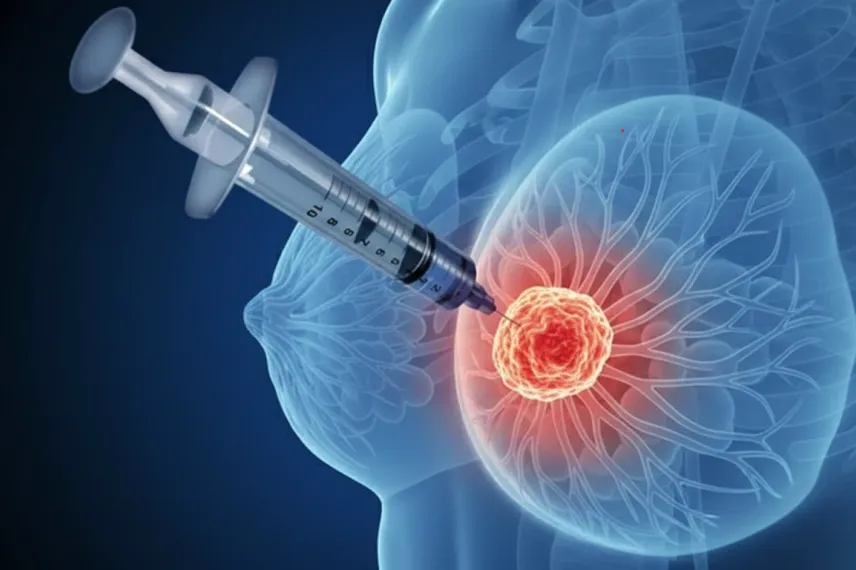
Vacuum-assisted breast biopsy (VABB) is a minimally invasive technique under ultrasound guidance that helps remove a breast lesion completely or partially without surgery. The doctor will examine and perform an ultrasound to advise on a suitable method.
What is VABB?
VABB uses a special instrument that creates a vacuum force to collect tissue samples through a small puncture in the skin. Compared with a standard needle biopsy, VABB collects more tissue, enabling a more accurate diagnosis and allowing complete removal of small tumors.
Applications
- Complete removal of benign breast tumors, reducing recurrence.
- Collecting tissue samples to determine the nature of suspicious lesions.
- Minimally invasive, reducing scarring and shortening recovery time.
Advantages
- No surgery required, only local anesthesia.
- Small puncture site, minimizing aesthetic impact.
- Collects more tissue, improving diagnostic accuracy.
Consultation at Phuc Khang
The doctor examines and performs an ultrasound to assess the size and location of the tumor, then advises on the indications, benefits and post-procedure monitoring. Patients are clearly informed so they can feel reassured and understand the method correctly.
Notes
The method is indicated after examination and ultrasound. Some lesions still require surgery or further monitoring depending on the histological result.
This information is for reference only and does not replace direct medical advice.
Related articles
- Does a Benign Thyroid Nodule Always Require Surgery?Many benign thyroid nodules can be monitored or treated with minimally invasive methods instead of surgery. Learn about the options available today.
- Fine Needle Aspiration: Procedure and What You Need to KnowFine needle aspiration (FNA) helps determine whether a thyroid or breast lesion is benign or malignant quickly and safely.
- What Is NIPT and Why Should It Be Done From Week 9?NIPT is a non-invasive prenatal screening test that is safe for mother and baby, can be performed from week 9 and offers high accuracy.